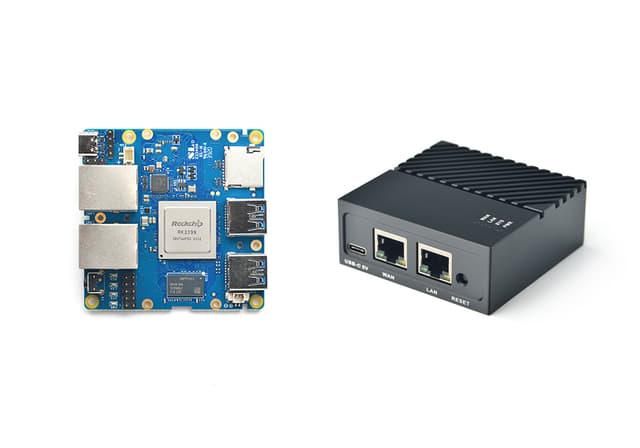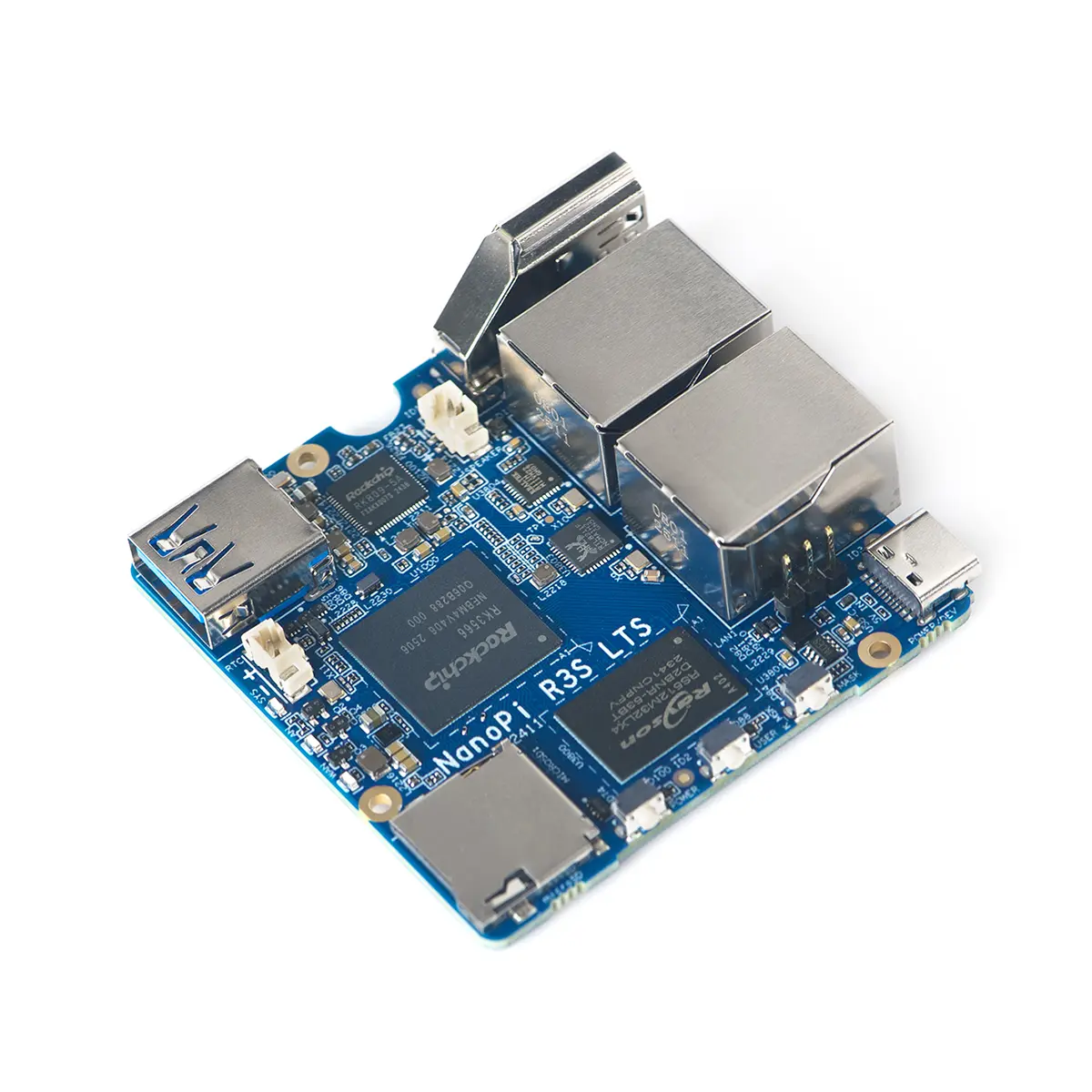
FriendlyElec NanoPi R3S LTS
Compact 57×57mm dual-GbE router board with RK3566 quad-core Cortex-A55, up to 2GB RAM, 32GB eMMC, HDMI, and USB-C power — the long-term-support mini network appliance from FriendlyElec.
$35.00
Tap any value to browse matching devices
Specifications
Components
Rockchip RK3566 quad-core Cortex-A55 @ 1.8GHz with Mali-G52 2EE GPU, PCIe 2.1, and HDMI 2.0. Efficient mid-range SoC for compact Linux router and IoT gateway applications.
GPIO Map
Overview
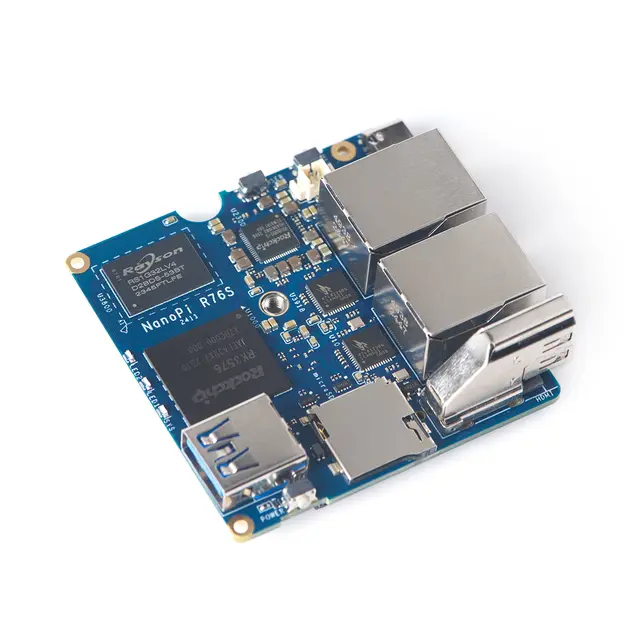
The NanoPi R3S LTS is a compact network appliance SBC from FriendlyElec built on the Rockchip RK3566 — a quad-core Cortex-A55 SoC designed for power-efficient networking and edge computing tasks. At just 57×57mm, it fits into a small CNC aluminum enclosure and is purpose-built for router, firewall, and IoT gateway applications.
The board features dual Gigabit Ethernet: one native GbE and one PCIe GbE, letting it act as a WAN/LAN router with line-rate throughput for home and small office use. RAM is 1GB or 2GB LPDDR4X, with an optional 32GB eMMC for OS storage alongside a microSD slot. No onboard WiFi is included — the design targets wired networking deployments, though USB WiFi adapters are supported.
For display applications, a full-size HDMI port and a 30-pin MIPI-DSI connector are available, along with a MIPI-CSI camera interface. The USB 3.0 Type-A port handles peripherals and USB storage. An RTC with backup battery header enables time-keeping for always-on deployments, and a power button plus user button provide physical controls.
Armbian, OpenWrt, FriendlyWrt, Ubuntu, and Debian are all supported. The LTS designation ensures production availability and software maintenance for extended deployments. It is widely used as a DIY router, WireGuard VPN gateway, Pi-hole DNS server, and compact home lab network node.
Use Cases
6Home Lab Networking
Networking equipment for home lab environments including high-speed NICs, switches, and time servers.
IoT Gateway
Acting as a local IoT gateway that aggregates data from sensors, runs MQTT broker, Node-RED, or Home Assistant, and bridges to the cloud.
Home Server
Used as a low-power home server for file sharing, self-hosted apps, and local services — often running Docker, Home Assistant, or similar on Armbian/Debian/Ubuntu.
Network Automation
Automate network tasks, monitor connectivity, and control networked devices via WiFi and Ethernet.
Embedded Linux
Running a full Linux distribution in embedded or headless applications, such as servers, gateways, edge devices, and automation controllers.
Wired Networking
Build reliable wired Ethernet-connected IoT nodes or edge computing devices.
Resources
Where to Buy
Explore more of the directory — popular use cases, firmware, and specs to browse next.