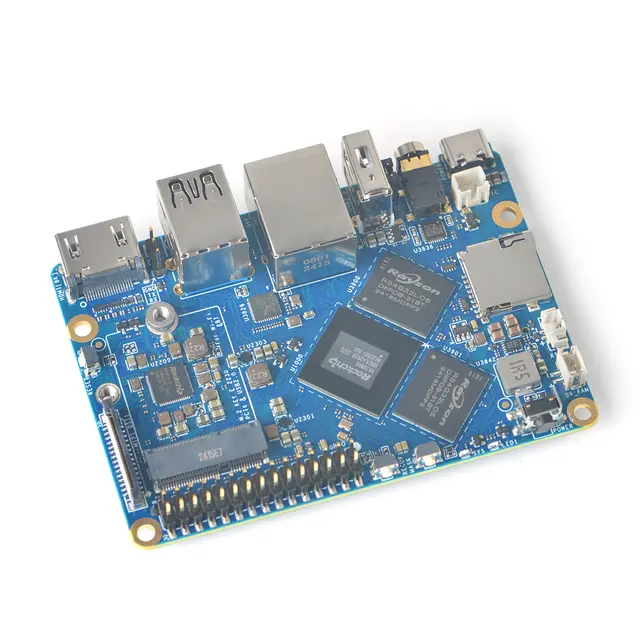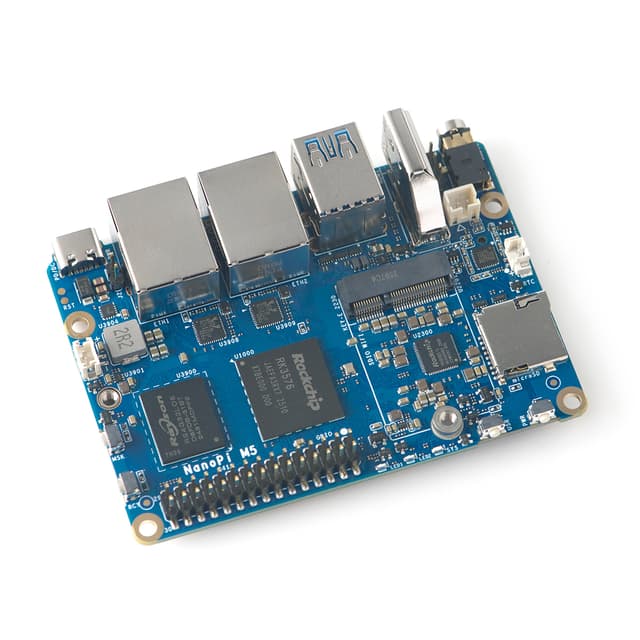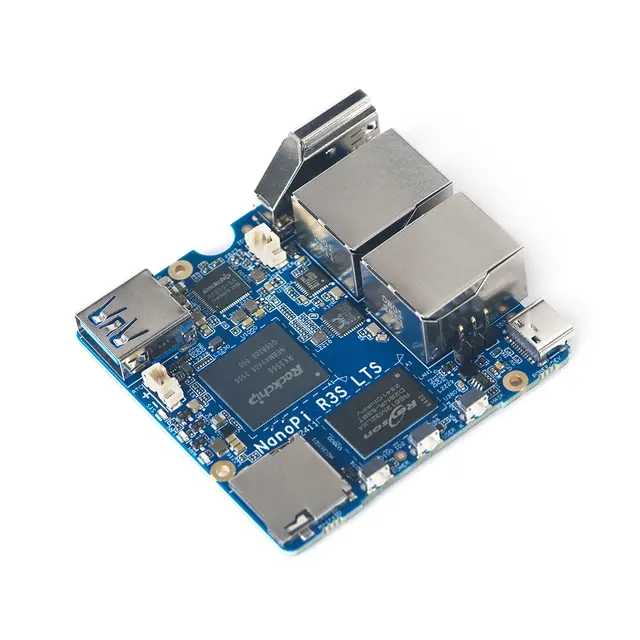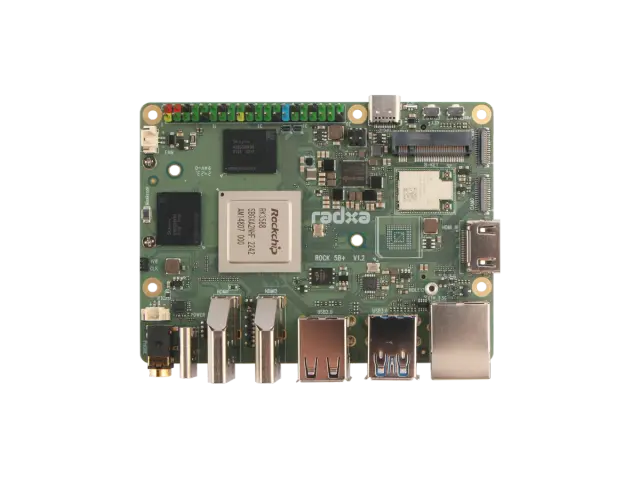
FriendlyElec NanoPC-T6 LTS
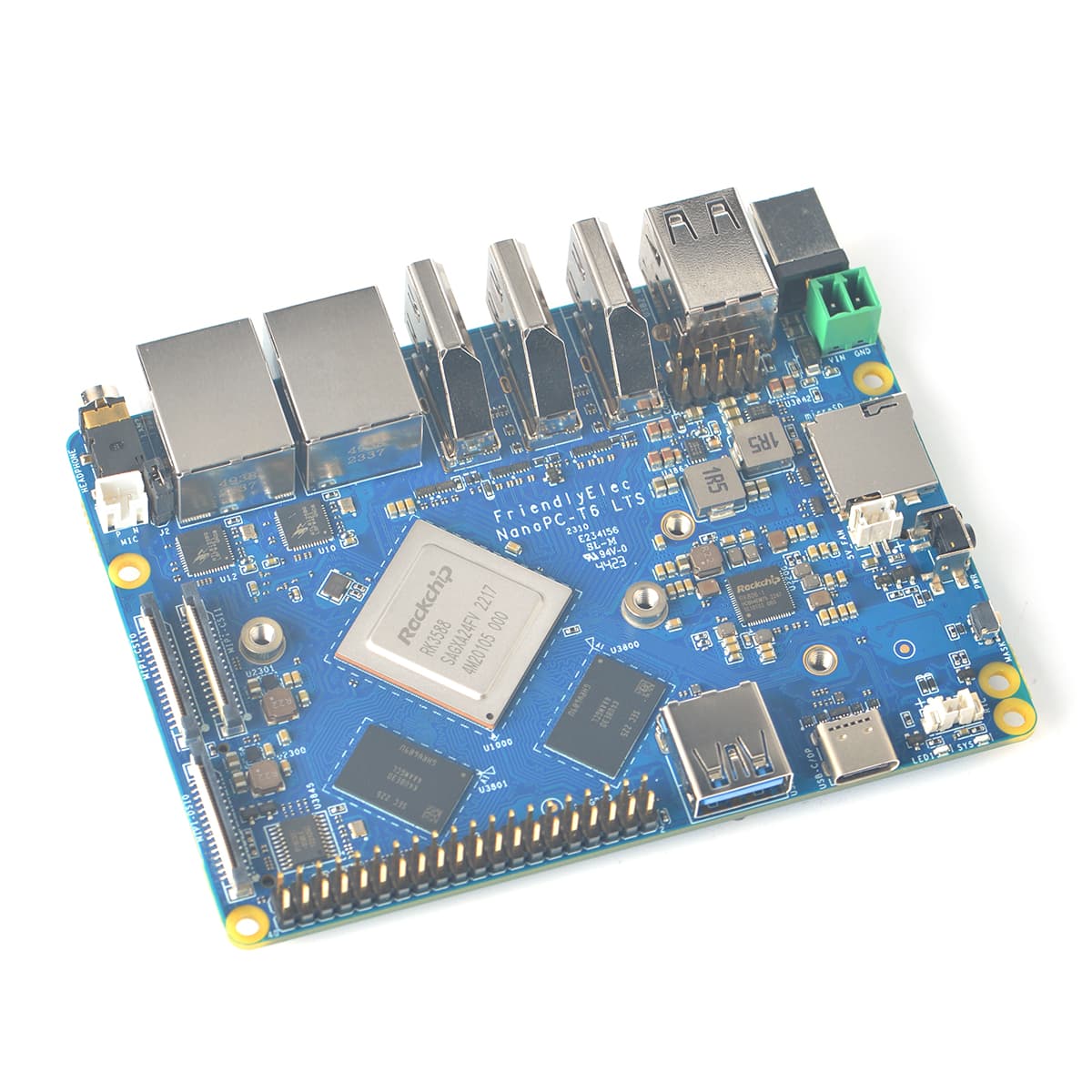
Rockchip RK3588 SBC with dual 2.5GbE, dual HDMI output + HDMI input, M.2 NVMe, and a 40-pin GPIO header — the long-term-support variant of FriendlyElec's flagship single-board computer.
$147.00
Tap any value to browse matching devices
Specifications
Components
Rockchip RK3588 octa-core SoC: 4× Cortex-A76 @ 2.4GHz + 4× Cortex-A55 @ 1.8GHz, Mali-G610 MP4 GPU, 6 TOPS NPU (INT4/8/16/FP16), 8K H.265/VP9 decode.
Realtek RTL8125BG 2.5 Gigabit PCIe Ethernet controller × 2, providing dual independent 2.5G LAN ports for high-throughput networking.
ARM Mali-G610 MP4 GPU supporting OpenGL ES 1.1/2.0/3.2, OpenCL 2.2, and Vulkan 1.2 for hardware-accelerated graphics and GPGPU workloads.
GPIO Map
Overview
The NanoPC-T6 LTS is FriendlyElec's long-term-support variant of their flagship RK3588 single-board computer, guaranteeing production availability and software maintenance for extended deployment cycles. It packs the full RK3588 SoC — octa-core ARM with 6 TOPS NPU and Mali-G610 GPU — onto a 110×80mm board aimed at embedded computing, network appliances, NAS builds, and edge AI workloads.
Networking is a standout feature: dual 2.5 Gigabit Ethernet ports (PCIe, RTL8125BG) make it well-suited for router, gateway, and NAS applications without needing additional adapters. Storage expansion is equally generous — a full-speed M.2 M-Key socket (PCIe 3.0 x4) accepts NVMe SSDs alongside an M.2 E-Key for optional WiFi/Bluetooth modules.
For display-heavy applications, the board offers two independent HDMI outputs (one 8K@60Hz, one 4K@60Hz) plus an HDMI input (4K@60Hz), all running simultaneously. The USB-C port supports DisplayPort for a third independent display output, and two MIPI DSI and two MIPI CSI connectors enable touchscreen and camera integration.
Armbian, FriendlyWrt, Ubuntu, and Debian are all supported with actively maintained images. The board is a popular choice for home lab networking, self-hosted services, Docker deployments, and multi-drive NAS systems where sustained throughput and long-term software availability matter.
Use Cases
8Home Server
Used as a low-power home server for file sharing, self-hosted apps, and local services — often running Docker, Home Assistant, or similar on Armbian/Debian/Ubuntu.
Edge Computing
Processing sensor data locally at the edge before transmitting to cloud for reduced latency.
Edge AI
On-device machine learning inference at the edge, without cloud dependency
Home Lab Networking
Networking equipment for home lab environments including high-speed NICs, switches, and time servers.
Digital Signage
Driving displays for advertising, information kiosks, or menu boards with 4K video and dynamic content.
ARM SBC Development
Used as an ARM Linux development and prototyping platform — running full Debian/Ubuntu for building and testing ARM-native software and embedded Linux applications.
Embedded Linux
Running a full Linux distribution in embedded or headless applications, such as servers, gateways, edge devices, and automation controllers.
IoT Gateway
Acting as a local IoT gateway that aggregates data from sensors, runs MQTT broker, Node-RED, or Home Assistant, and bridges to the cloud.
Resources
Where to Buy
Explore more of the directory — popular use cases, firmware, and specs to browse next.