T-ETH-Lite ESPHome Wired Ethernet Sensor Node
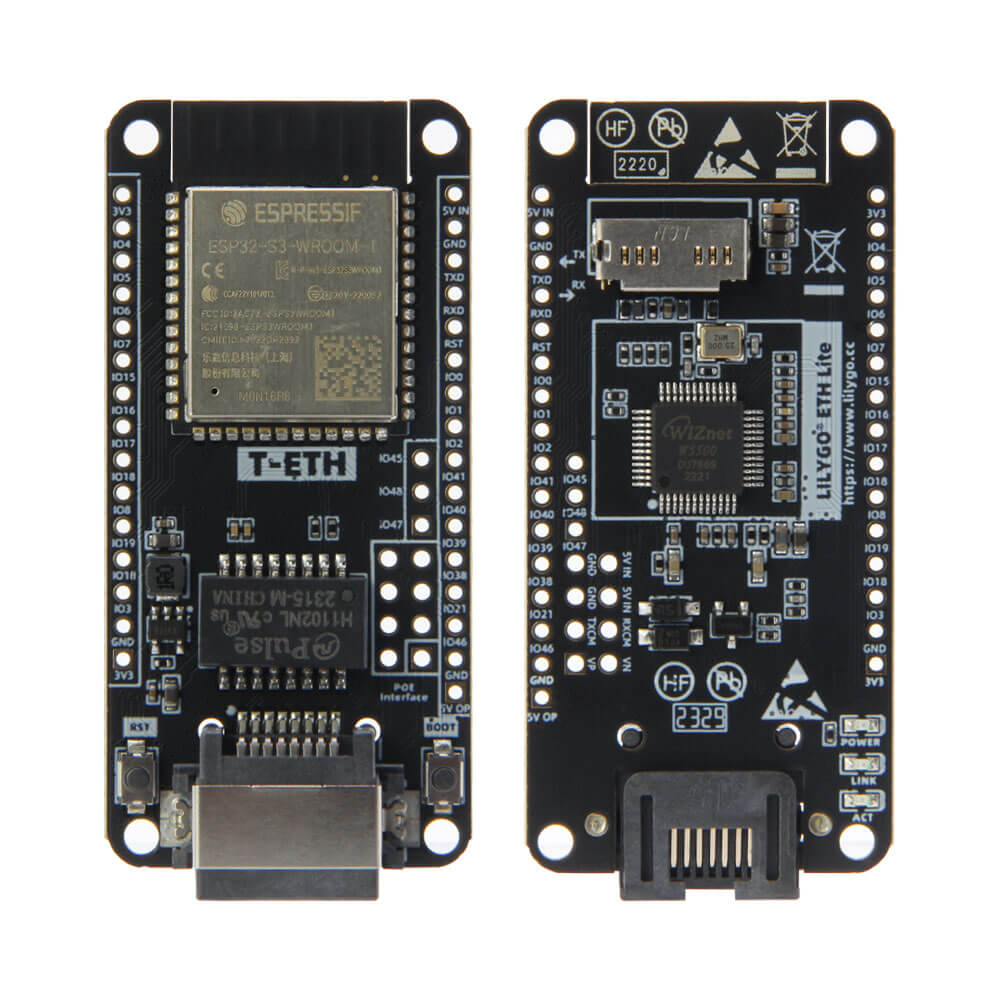
ESPHome configuration for the LILYGO T-ETH-Lite ESP32-S3 that integrates W5500 wired Ethernet with I2C sensor support — ideal for reliable, WiFi-free Home Assistant sensor nodes using standard Cat5 cable.
Overview
This project demonstrates how to use the LILYGO T-ETH-Lite ESP32-S3 with ESPHome over wired Ethernet, eliminating WiFi dependency for Home Assistant integrations. The T-ETH-Lite's W5500 SPI Ethernet controller is configured alongside an I2C bus, allowing environmental sensors like the BMP280 (temperature and pressure) to be read and reported reliably over a wired network connection.
Features
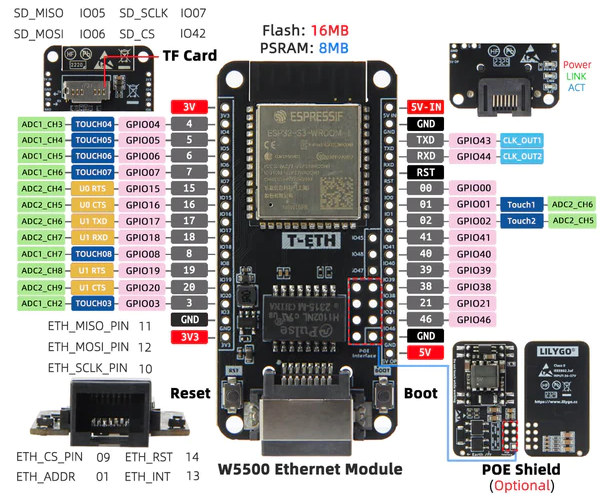
The ESPHome YAML configuration maps the W5500 controller to the correct SPI pins (CLK: GPIO10, MOSI: GPIO12, MISO: GPIO11, CS: GPIO9, INT: GPIO13) and sets up the I2C bus for sensor expansion. The result is a stable, low-latency Home Assistant entity that does not compete for 2.4 GHz airtime.
Both Arduino and ESP-IDF frameworks are documented. The repository includes PCB design files for a custom carrier board that adds a screw terminal breakout and DIN-rail mounting, making permanent installations in electrical cabinets straightforward.
Wired Ethernet is particularly valuable in RF-congested environments (apartments, commercial buildings) or for mission-critical sensors where WiFi packet loss would be unacceptable, such as leak detectors, door contacts, or HVAC monitoring.
Getting Started
Reference the provided ESPHome YAML template for the T-ETH-Lite ESP32-S3 variant. Configure your static IP or DHCP settings, add your sensor definitions, and compile. The repository's README covers both the minimal wiring required and the optional BMP280 I2C sensor connection.