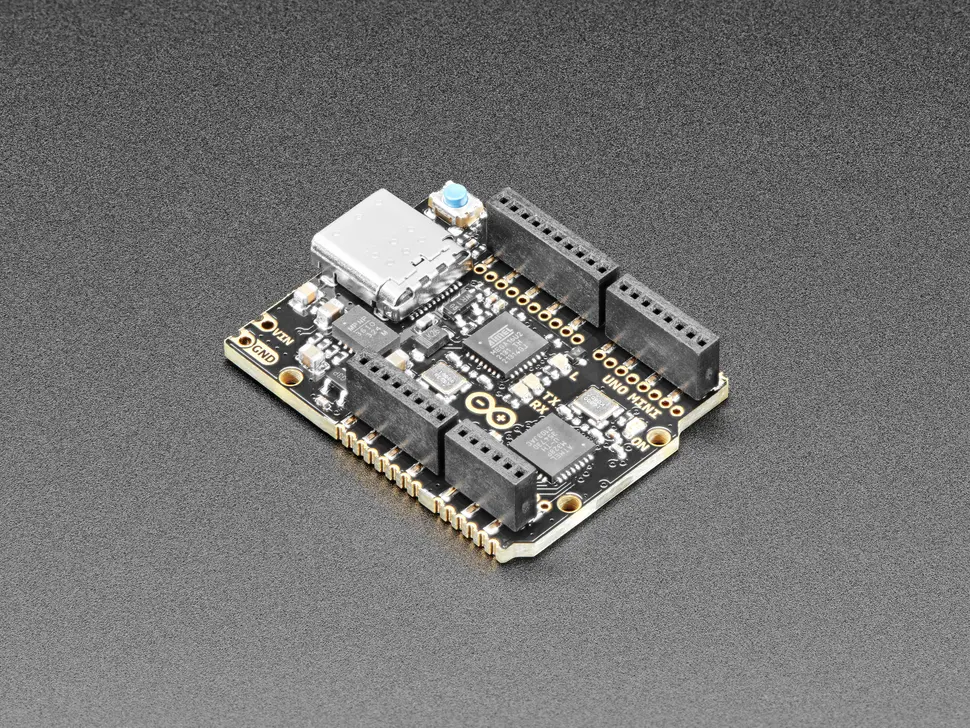
Arduino UNO Mini Limited Edition
Miniaturised collector's Arduino UNO with ATmega328P at 16 MHz in a 34.2 × 26.7 mm form factor with USB-C, individually numbered and signed by Arduino's founders.
$45.00
Tap any value to browse matching devices
Specifications
Components
Bus Interfaces
GPIO Map
Overview
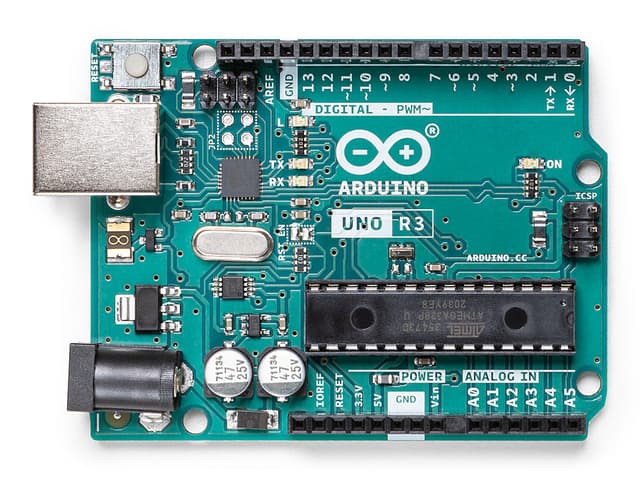
The Arduino UNO Mini Limited Edition is a miniaturised version of the iconic Arduino UNO, shrunk down to 34.2 × 26.7 mm while preserving the ATmega328P microcontroller, 16 MHz crystal, and full complement of 14 digital I/O pins and 6 analogue inputs. The pin pitch is reduced to 1.27 mm (half the classic UNO spacing), so it is not directly shield-compatible, but all the same peripheral capabilities remain accessible.
USB-C replaces the original Type-B connector, bringing modern connectivity to this classic design. The board runs at 5 V with a 16 MHz clock, matching the original UNO's behaviour so existing sketches port without modification. The 32 KB of Flash, 2 KB of SRAM, and 1 KB of EEPROM are identical to any standard UNO.
Each unit is individually numbered and shipped in a special collector's box with the signatures of Arduino's co-founders. The limited-edition release was aimed at celebrating the Arduino platform's history and making it available to collectors and enthusiasts who wanted the UNO in a more compact form.
The board is programmed via the Arduino IDE exactly as a standard UNO, supporting the entire Arduino library ecosystem. It is suitable for education, prototyping lightweight sketches, and as a conversation piece for the Arduino community.
Use Cases
2Where to Buy
Available Software
1Explore more of the directory — popular use cases, firmware, and specs to browse next.