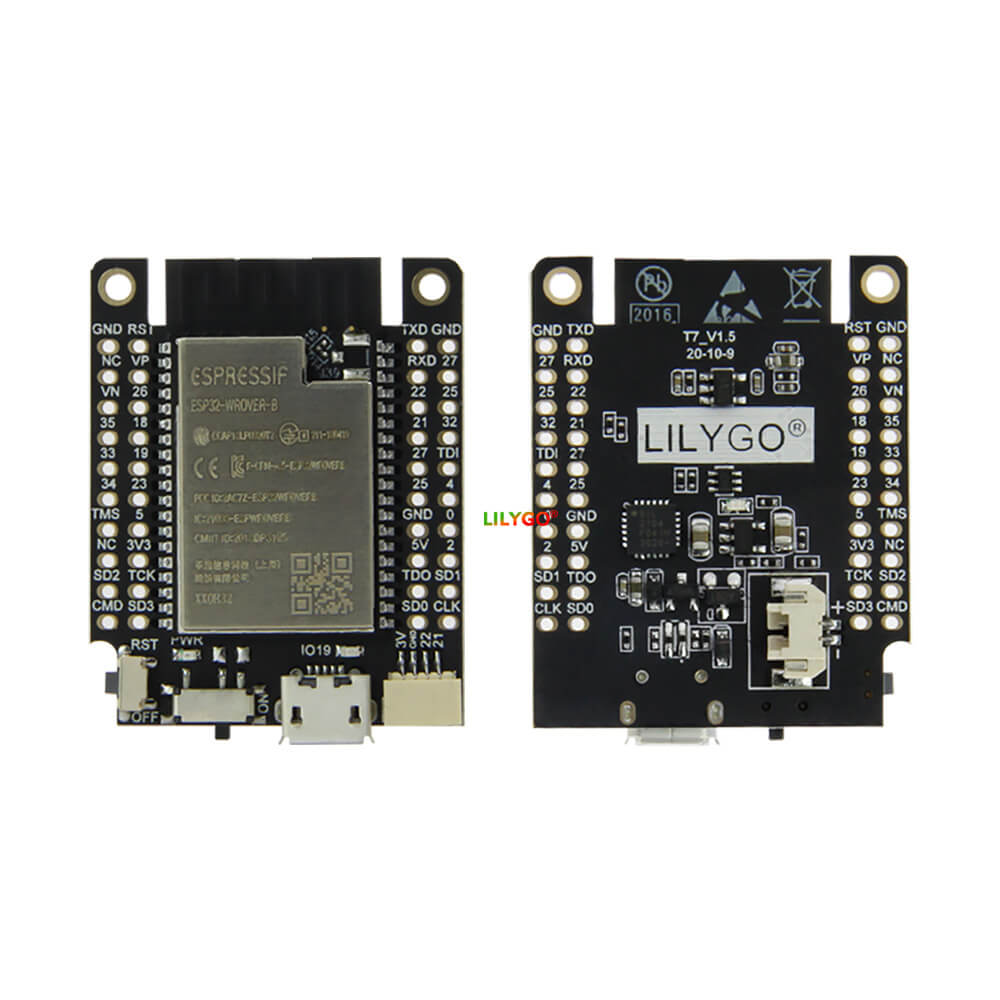
LILYGO T7 Mini32 V1.5
A miniature ESP32 development board with a compact 40x31mm footprint, 8MB PSRAM, and Wemos D1 Mini-compatible pinout, offering Wi-Fi and Bluetooth for space-constrained IoT projects.
$7.44
Hardware Specifications
Connectivity
Components
Xtensa dual-core LX6 at 240MHz with 520KB SRAM, 8MB PSRAM, integrated Wi-Fi and Bluetooth
USB to serial bridge chip supporting up to 4Mbps
Resources


Where to Buy
Overview
The LILYGO T7 Mini32 V1.5 is a compact ESP32 development board measuring just 40.27x31.07mm, designed to fit into tight spaces while still providing full ESP32 capabilities. The board is compatible with the Wemos D1 Mini form factor, making it a drop-in upgrade for projects previously using D1 Mini boards that need more processing power or memory.
The standout feature is the 8MB PSRAM, which significantly expands the available memory beyond the ESP32's built-in 520KB SRAM. This makes the T7 Mini32 suitable for applications that require large data buffers, image processing, or running complex algorithms that would otherwise exceed the ESP32's internal RAM. Flash options are 4MB or 16MB, and the board supports OTA (Over-the-Air) firmware updates.
The board runs FreeRTOS and supports all standard ESP32 development interfaces: UART, SPI, SDIO, I2C, LED PWM, I2S, GPIO, ADC, and DAC. It weighs only 6.42g and operates across a wide temperature range of -40°C to +85°C, making it suitable for outdoor and industrial installations. Power can be supplied via Micro USB or a 1.25mm JST 2-pin LiPo battery connector.
Firmware Compatibility
- Arduino: Fully supported. Select "ESP32 Wrover Module" to enable PSRAM access.
- ESP-IDF: Supported with FreeRTOS and full SDK access.
- MicroPython: Supported including PSRAM as extended heap.
- AT Firmware: Supported for simple command-based Wi-Fi connectivity.
Flashing Guide
- Install the CH9102 USB-to-serial driver.
- Connect via Micro USB cable.
- In Arduino IDE, select "ESP32 Wrover Module" as the board (enables PSRAM support) and the correct COM port.
- Install the ESP32 board package from Espressif.
- Upload your sketch. The board supports automatic reset into bootloader mode via the CH9102 DTR/RTS lines.
- For OTA updates, use the ArduinoOTA library or ESP-IDF OTA component after initial flashing.
Related Products
ESP32This product page may contain errors. If you find any, please report them.