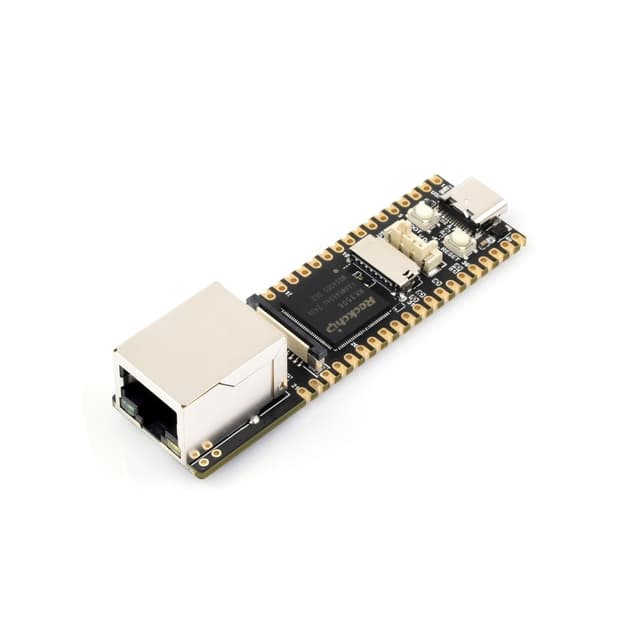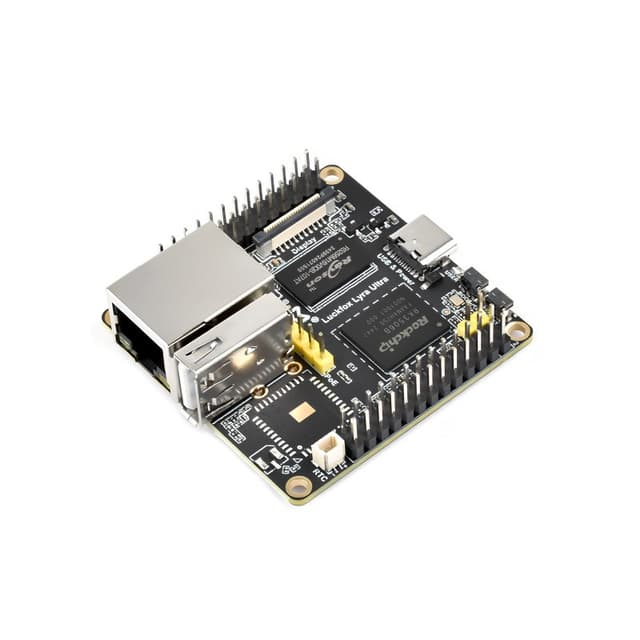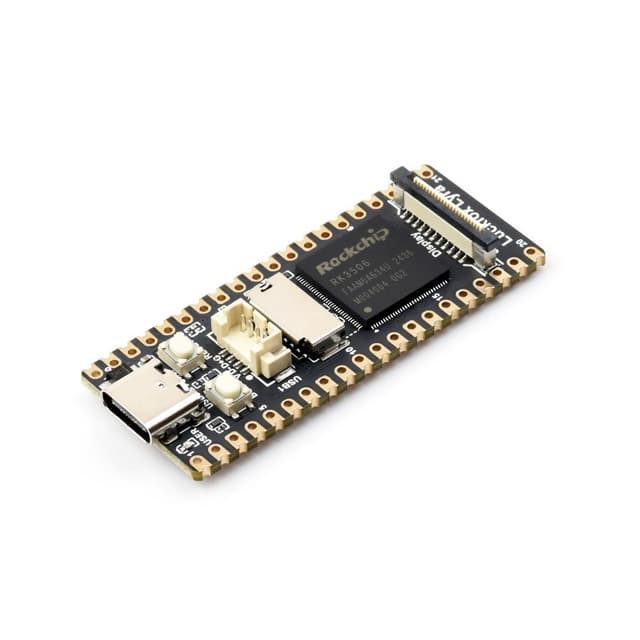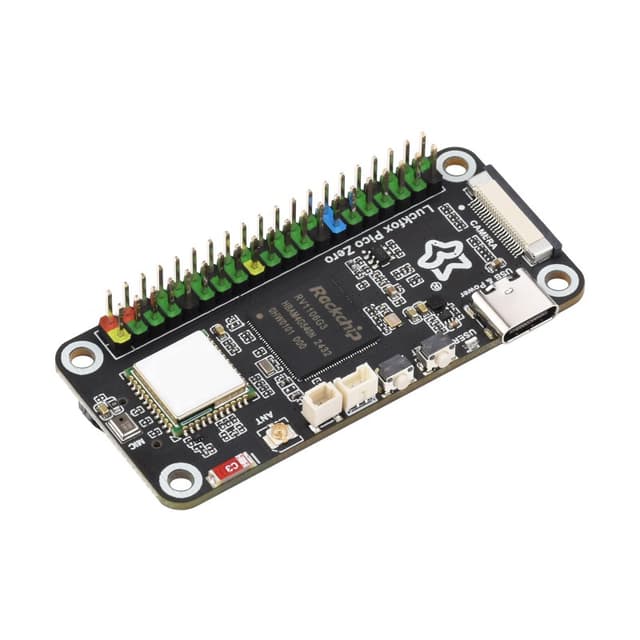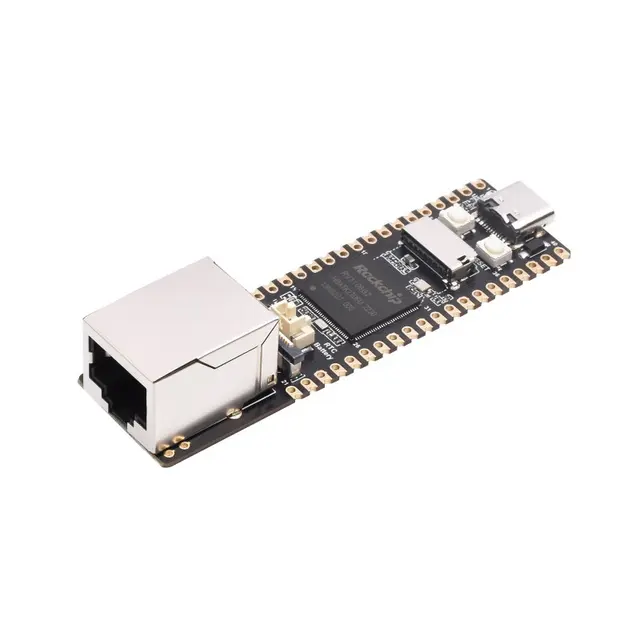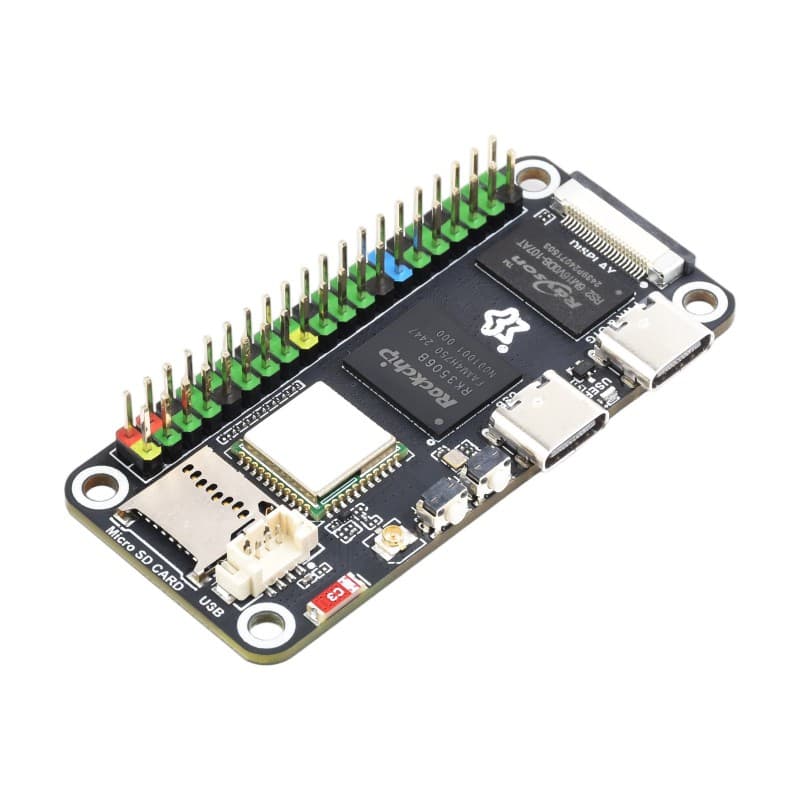
LuckFox Lyra Zero W
Compact Linux SBC based on Rockchip RK3506B with triple-core ARM Cortex-A7 @ 1.2GHz + Cortex-M0, 512MB DDR3L, 256MB NAND Flash, WiFi 6, Bluetooth 5.2, MIPI DSI display, 28 Matrix IO pins, and 40-pin RPi-compatible header.
$26.99
Tap any value to browse matching devices
Specifications
Components
Triple-core ARM Cortex-A7 @ 1.2GHz + Cortex-M0 MCU with built-in audio/video codec
256MB SLC NAND Flash for boot image and rootfs storage
Bus Interfaces
LuckFox Lyra Zero W
The LuckFox Lyra Zero W combines wireless connectivity with a display-centric design. Based on the Rockchip RK3506B with triple-core ARM Cortex-A7 @ 1.2GHz + Cortex-M0 MCU, it features WiFi 6, Bluetooth 5.2, 512MB DDR3L, 256MB SPI NAND Flash, MIPI DSI display output, and a 40-pin Raspberry Pi HAT-compatible header with 28 Rockchip Matrix IO pins.
Key Features
- RK3506B SoC: 3x ARM Cortex-A7 @ 1.2GHz + Cortex-M0 MCU
- Wireless: WiFi 6 (2.4GHz 802.11ax) + Bluetooth 5.2/BLE with switchable internal/external antenna
- Memory: 512MB DDR3L + 256MB SPI NAND Flash (W25N02KV)
- Display: MIPI DSI 2-lane (up to 1280x1280 @ 60Hz), RPi DSI-compatible
- USB: 1x USB-C OTG 2.0 + 2x USB HOST 2.0 via HUB
- GPIO: 28 Rockchip Matrix IO pins (98 multiplexed functions: PWM, UART, I2C, SPI, CAN, ADC)
- 40-pin header: Partial Raspberry Pi HAT compatibility
- Storage: TF card slot for additional storage
- Audio: Multiple audio input/output options via built-in codec
- Weight: 20g
Software Support
Runs Buildroot Linux with full SDK support. The SoC supports both SMP (Symmetric Multi-Processing) and AMP (Asymmetric Multi-Processing) configurations, allowing the Cortex-M0 to run RTOS independently while the Cortex-A7 cores run Linux.
Use Cases
2Resources
Where to Buy
Available Software
1Explore more of the directory — popular use cases, firmware, and specs to browse next.