T-SIM7080G-S3 Solar-Powered NB-IoT Remote Sensor Node
Arduino/PlatformIO firmware for the LILYGO T-SIM7080G-S3 that creates a solar-powered, battery-backed NB-IoT remote sensor node publishing GPS location and environmental data to MQTT or cloud IoT platforms — with deep sleep for multi-day battery life.
Overview
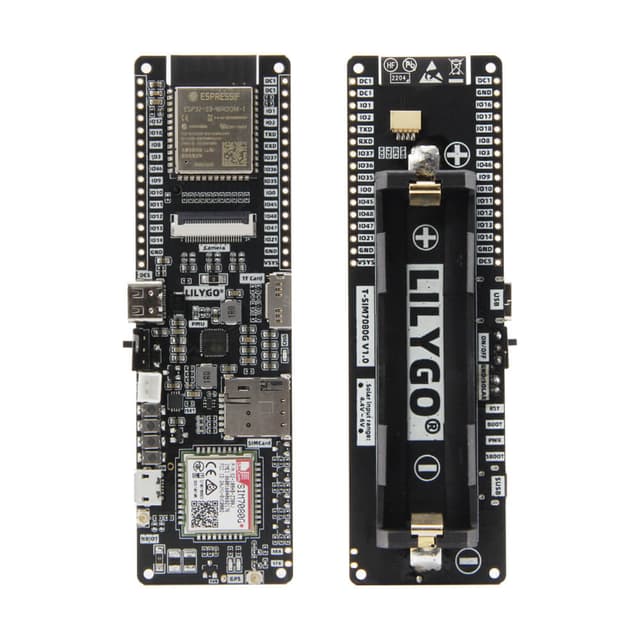
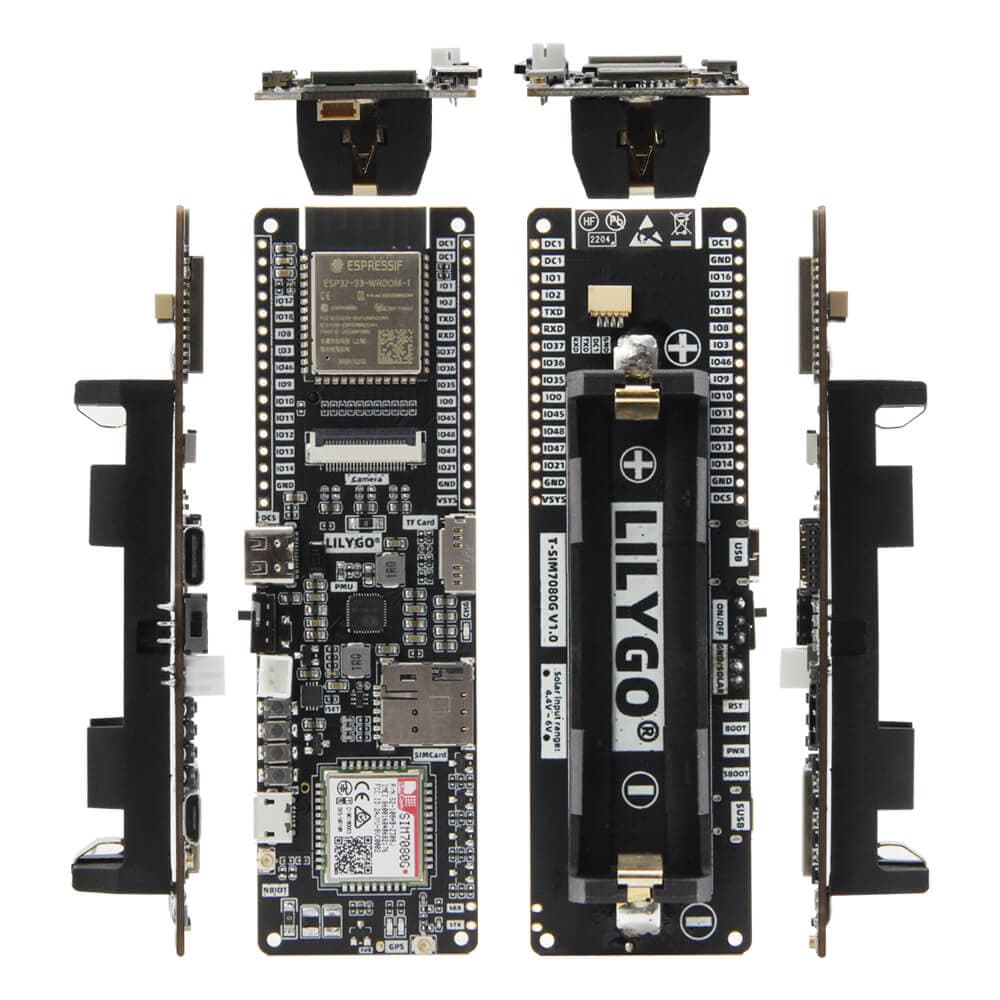
The LILYGO T-SIM7080G-S3 combines an ESP32-S3 microcontroller, SIM7080G NB-IoT/Cat-M modem, GNSS receiver, 18650 battery holder, and solar charging input on a single compact board — making it ideal for autonomous remote monitoring deployments. This project covers setting up the board for a low-power sensor node that wakes periodically, collects data, transmits over cellular, then returns to deep sleep.
Features
The SIM7080G module supports global NB-IoT and Cat-M bands, enabling cellular connectivity in remote areas where GSM/LTE infrastructure exists but traditional 4G signals are weak. MQTT examples in the official repository demonstrate publishing sensor readings to AWS IoT, Thingsboard, or any MQTT broker.
The onboard GNSS receiver provides GPS coordinates for asset tracking use cases. An SD card slot enables local data buffering when cellular connectivity is temporarily unavailable — the device uploads queued readings upon reconnection. Solar input (4.4V–6V, recommended 5–10W panel) combined with deep sleep modes allows unattended operation for weeks or months per charge cycle.
The XPowersLib PMU (Power Management Unit) variant provides precise battery voltage, charging current, and power path control, enabling sophisticated power management strategies that adapt to available solar energy.
Getting Started
Clone the official LilyGo-T-SIM7080G repository and select the appropriate example sketch for your use case (NB-IoT MQTT, GPS tracking, or deep sleep). Set your APN credentials and MQTT broker details, compile with PlatformIO (recommended) or Arduino IDE 2.x with the ESP32 board package installed, and flash via the USB-C port.