Build Guideintermediate
Rain Gauge Data Logger with Bee Data Logger
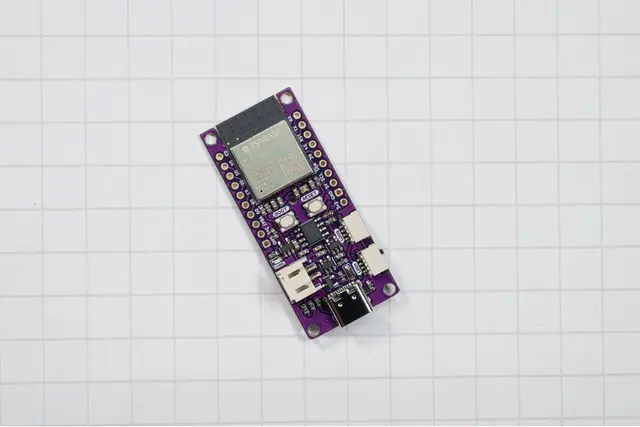
Build a battery-powered rain gauge that logs rainfall measurements with RTC timestamps to an SD card. Uses the Bee Data Logger's ADC inputs to read a tipping bucket rain gauge sensor for long-term weather tracking.
Boards:ESP32-S3
Firmware:Arduino
Use Cases:Environmental MonitoringData Logging
Overview
This project turns the Bee Data Logger into a standalone rain gauge data logger, recording rainfall events with precise RTC timestamps to a microSD card. The ultra-low-power deep sleep mode allows the system to run for months outdoors on battery power.
How It Works
- A tipping bucket rain gauge generates pulses that are read via the Bee Data Logger's ADC or GPIO pins
- The ESP32-S3 can wake from deep sleep on pin change to count tips
- Rainfall data is timestamped using the DS3231 RTC and saved to the SD card
- The
getBatteryVoltage()function from the Arduino Helper library monitors remaining battery life - Data is stored as CSV files named by date using the RTC
Hardware Required
- Bee Data Logger (ESP32-S3)
- Tipping bucket rain gauge with pulse output
- microSD card
- LiPo battery
- CR1220 coin cell for RTC backup
- Weatherproof enclosure
Optional Enhancements
- Add a BME280 via Qwiic for temperature, humidity, and barometric pressure
- Use the MQTT backup example to send data to a home weather dashboard
- Add a solar panel for indefinite outdoor operation
Software
Uses the Arduino Helper library with the ADC-SD example as a starting point. The Read-ADC-Voltages example demonstrates reading the 7 available ADC channels.