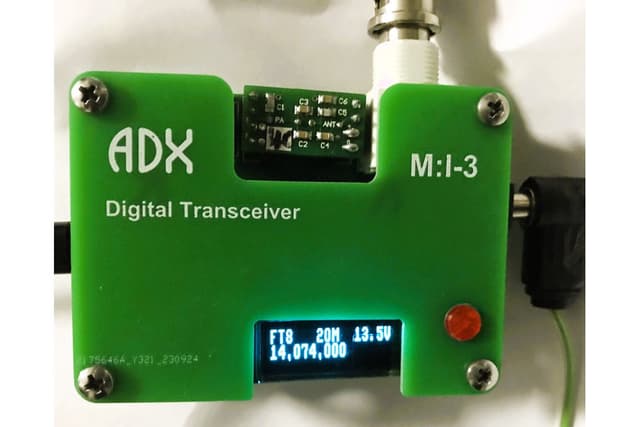
FT8 QRP Operating Guide with CRKits ADX-S Radio
Practical blog tutorial by Stephen Smith covering ADX-S kit assembly, WSJT-X configuration for FT8 digital mode, antenna tips, and real-world QRP contacts across Western Canada and the US Pacific.
Overview
Stephen Smith's detailed blog post documents his journey from building a CRKits ADX-S QRP transceiver kit to making successful FT8 contacts across Western Canada and the US Pacific states, including Hawaii. The guide covers the complete workflow from assembly through first contacts.
What You'll Learn
- Kit Assembly Tips: Through-hole soldering with notes on keeping the Arduino Nano seated during pin soldering
- Power Configuration: USB cable vs. separate 12V adapter (never use both simultaneously)
- WSJT-X Setup: Complete configuration walkthrough for FT8 on 20 meters
- Antenna Advice: Why cheap antennas are "useless" and how a simple hedge-mounted wire antenna outperforms them; how an antenna tuner can double received signal strength
Key Tips and Gotchas
- Always check the "Hold Tx freq" checkbox in WSJT-X
- Watch for "Enable Tx" auto-disable behavior
- Sync your computer clock to an NTP server — WSJT-X will not decode without it
- FT8 operates in 15-second transmission windows, requiring precise timing
- Antennas are described as "the most important component in the system"
Results
Using only a hedge-mounted wire antenna and approximately 3.5W of power on 20 meters, contacts were successfully made across Western Canada and western US states including Hawaii — demonstrating the effectiveness of QRP digital modes with modest equipment.
About FT8
FT8 was developed by Steve Franke and Nobel laureate Joe Taylor. It works in unfavorable conditions at low power through short digital bursts, making it ideal for QRP operations where every watt counts.