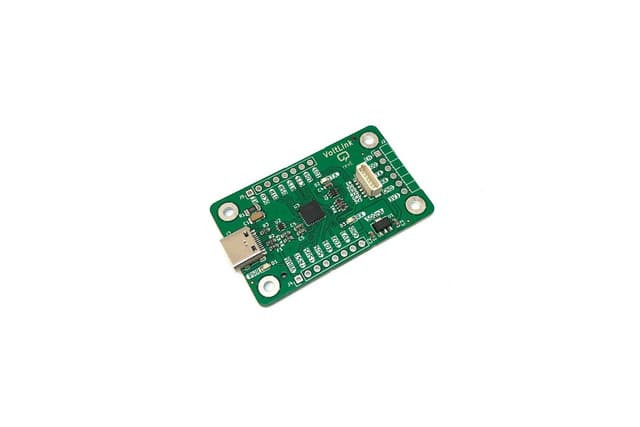
VoltLink Shelly Adapter Production Test Jig
Automated test jig that chains six Shelly adapters in series with an ESP32 to verify VoltLink board quality before shipping, catching soldering defects on USB-C, QFN, and JST-SH connectors.
Voltlog designed a production test jig (documented in Voltlog #426) to ensure every VoltLink board works correctly before being shipped to customers. The jig uses a chain of six Shelly adapters connected in series with an ESP32 module at the end to verify the complete signal path.
How It Works
The test jig validates the entire VoltLink signal chain:
- USB Type-C connector — verifies proper USB enumeration and data lines
- CP2102N QFN chip — confirms serial communication at expected baud rates
- JST-SH connector — tests the slim programming connector
- PCB copper layers — validates trace continuity
- Auto-reset circuitry — confirms bootloader entry works on a real ESP32 target
By daisy-chaining six adapters, the test covers all common manufacturing defects in a single connection test.
Why This Matters
Common failure points in small USB serial adapter boards include:
- Cold solder joints on the QFN-packaged CP2102N chip
- Misaligned or poorly soldered USB Type-C connectors
- Open or shorted traces on inner PCB layers
- Defective JST-SH connectors
The test jig catches these issues before boards reach customers, improving quality and reducing returns.
Building Your Own
While primarily designed for Voltlog's production workflow, the test jig concept can be adapted by anyone doing small-batch manufacturing of serial adapter boards or similar USB peripherals.