ESP32-CAM
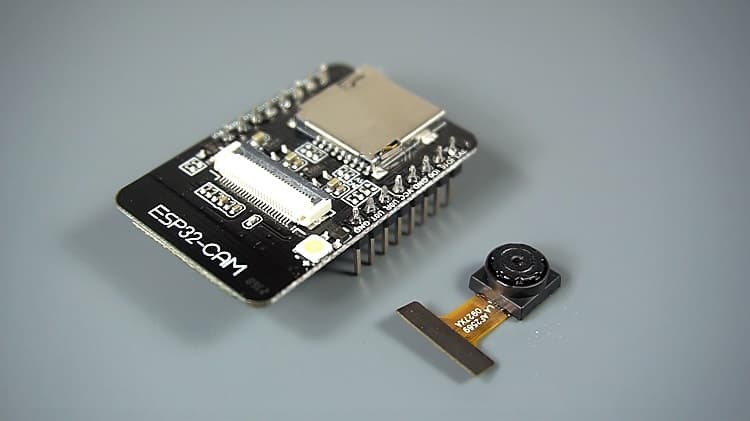
ESP32-based camera dev board with OV2640 2MP sensor, microSD slot, WiFi, Bluetooth, 4MB flash, and 520KB SRAM. Ideal for DIY security cameras, timelapse, and computer vision projects.
$9.95
Tap any value to browse matching devices
Specifications
Components
Dual-core Xtensa LX6 microcontroller at 240 MHz with WiFi and Bluetooth 4.2
2-megapixel CMOS image sensor supporting JPEG, BMP, and grayscale output up to 1600x1200
MicroSD card slot for local image and video storage up to 4GB
Bright white LED flash for low-light camera operation
Bus Interfaces
Overview
The ESP32-CAM is one of the most popular and affordable ESP32 camera modules available. Based on the AI-Thinker design, it pairs an ESP32-S chip with an OV2640 2MP camera sensor, making it an excellent choice for image capture, video streaming, and basic computer vision projects.
Key Features
- OV2640 camera — 2MP sensor capable of JPEG, BMP, and grayscale output, with resolutions up to 1600x1200
- ESP32 dual-core — 240 MHz Xtensa LX6 processor with WiFi 802.11 b/g/n and Bluetooth 4.2
- MicroSD card slot — supports up to 4GB for local image/video storage
- 4MB flash + 520KB SRAM — plus 4MB PSRAM for frame buffering
- Deep sleep mode — as low as 6mA, suitable for battery-powered deployments
- Compact form factor — 27mm x 40.5mm, fits in small enclosures
Specifications
| Spec | Value |
|---|---|
| MCU | ESP32-S (Xtensa dual-core LX6, 240 MHz) |
| Flash | 4 MB |
| SRAM | 520 KB |
| PSRAM | 4 MB |
| Camera | OV2640 2MP (up to 1600x1200) |
| Storage | MicroSD (up to 4GB) |
| WiFi | 802.11 b/g/n |
| Bluetooth | 4.2 (BLE + Classic) |
| Operating Voltage | 3.3V |
| Power | 5V via pin header |
| Dimensions | 27 x 40.5 mm |
Common Applications
- DIY security cameras — stream MJPEG over WiFi with motion detection
- Timelapse photography — capture images at intervals and store to SD card
- Computer vision — run lightweight CV models or stream to a server for processing
- QR/barcode scanning — decode QR codes and barcodes in firmware
- Face detection — built-in face detection in the Espressif camera example
Getting Started
The ESP32-CAM does not include a built-in USB-to-serial converter. You will need an FTDI adapter or the matching baseboard (often sold together) to upload firmware. The board is supported by Arduino IDE, ESP-IDF, PlatformIO, ESPHome, and Tasmota.
Notes
- No onboard USB connector on the base module — use the baseboard or an external FTDI adapter
- GPIO0 must be connected to GND during flashing
- The onboard LED shares a pin with the SD card (HS2_DATA1), which can cause conflicts if both are used simultaneously
Use Cases
5Security Camera
WiFi-connected camera for surveillance, motion detection, and remote video monitoring.
timelapse
Computer Vision
Image recognition, object detection, and ML inference using embedded cameras and AI-capable processors.
Video Streaming
Capturing and streaming video over WiFi or network, including IP camera feeds and real-time monitoring.
IoT Prototyping
General-purpose IoT development board suitable for rapid prototyping of connected devices, sensor nodes, and wireless applications.
Where to Buy
Explore more of the directory — popular use cases, firmware, and specs to browse next.