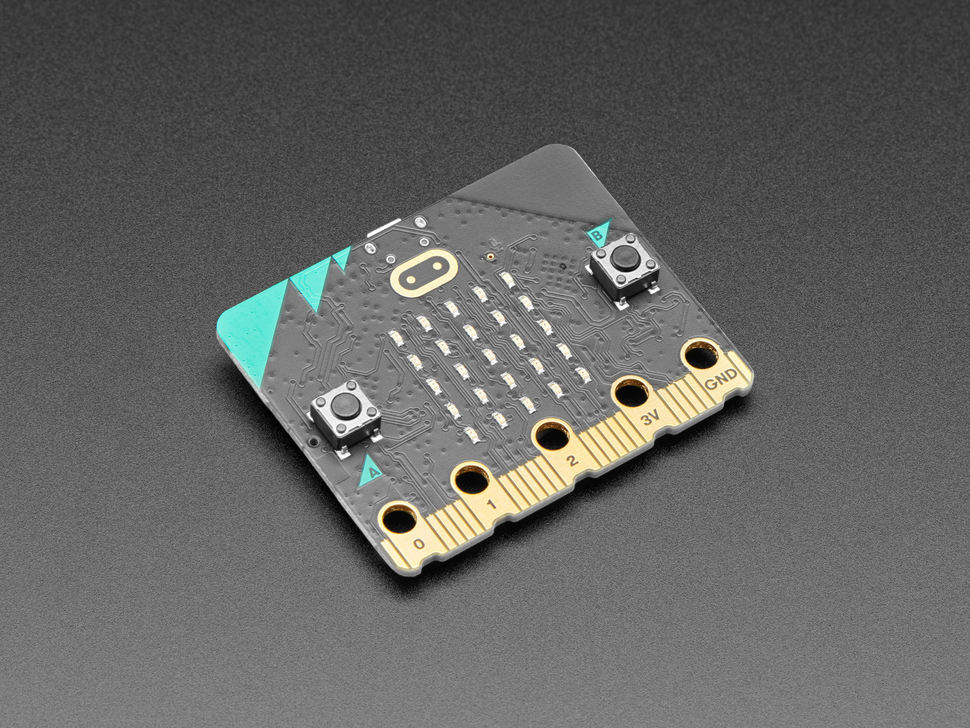
BBC micro:bit v2
Upgraded BBC micro:bit with Nordic nRF52833 Cortex-M4F, Bluetooth 5.1, 5×5 LED matrix, 2 buttons, capacitive touch logo, built-in speaker and MEMS microphone, edge connector, and low-power mode. Same form factor as v1.
$17.95
Tap any value to browse matching devices
Specifications
Certifications
Components
Nordic Semiconductor nRF52833 ARM Cortex-M4F @ 64MHz, 512KB Flash, 128KB RAM, Bluetooth 5.1 BLE.
Bus Interfaces
GPIO Map
Overview
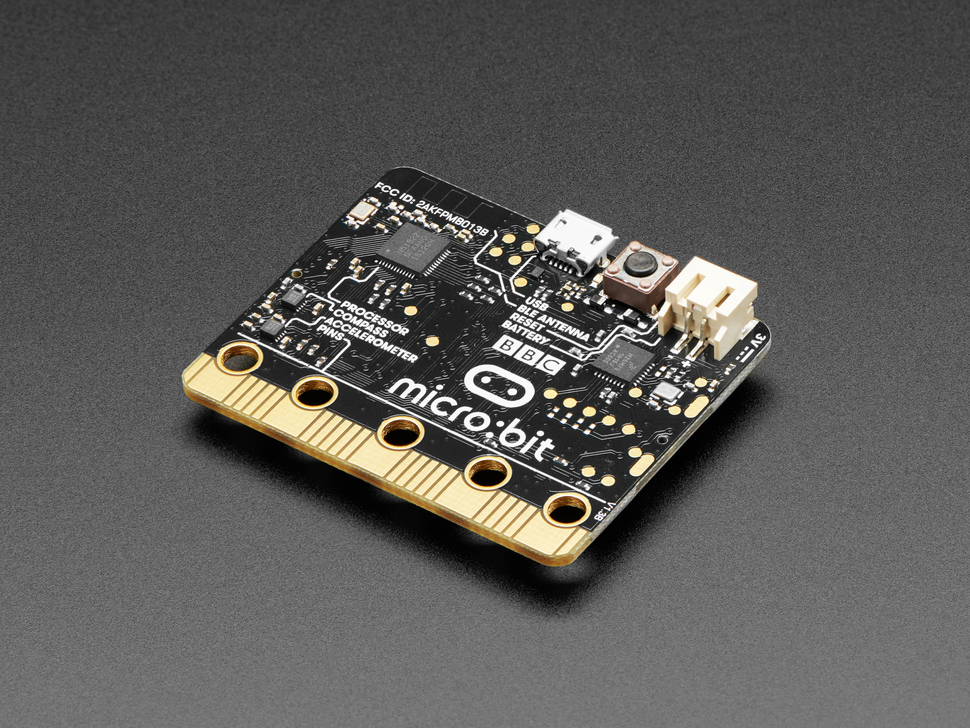
The BBC micro:bit v2 is a significant upgrade to the original micro:bit designed for UK primary and secondary school computing education. The v2 replaces the nRF51822 of the original with the more powerful Nordic nRF52833 ARM Cortex-M4F, delivering substantially increased RAM and Flash alongside a hardware floating-point unit. The form factor and edge connector remain identical to v1, ensuring compatibility with the large ecosystem of accessories, cases, and expansion boards built for the original.
The most notable hardware additions in v2 are a built-in piezoelectric speaker and a MEMS digital microphone — both absent on v1 — enabling audio input and output without any external components. The logo on the front now acts as a capacitive touch input, providing a third user interaction point alongside the A and B buttons. A new power management mode accessible via double-clicking the reset button puts the board into ultra-low-power sleep for battery-powered deployments.
The 5×5 LED matrix remains for displaying text, numbers, and simple animations. Bluetooth 5.1 LE enables wireless communication with smartphones, tablets, and other micro:bits for multi-device projects. The 25-pin edge connector exposes 19 GPIO pins (three large rings for alligator clips + 15 smaller pins), I2C, SPI, UART, and analog inputs for attaching sensors, motors, displays, and expansion boards.
Programming is fully compatible with existing v1 code via MakeCode (blocks and JavaScript), Python (via MicroPython), and the Scratch extension. Teachers can continue using existing lesson plans and projects with only minor adaptation needed to take advantage of the new speaker and microphone.
Use Cases
3IoT
Internet of Things applications including connected sensors, actuators, and smart devices that communicate over WiFi, BLE, LoRa, or other wireless protocols.
Wearable
Body-worn computing devices including smartwatches, fitness bands, and health monitors.
Environmental Monitoring
Monitoring environmental conditions like temperature, humidity, air quality, and weather data using remote sensors.
Where to Buy
Explore more of the directory — popular use cases, firmware, and specs to browse next.