Adafruit PyGamer
Handheld gaming console and dev board powered by ATSAMD51J19 (120MHz Cortex-M4F) with a 1.8" TFT display, 5 NeoPixels, accelerometer, and Feather-compatible headers. Runs MakeCode Arcade, CircuitPython, or Arduino.
$44.95
Tap any value to browse matching devices
Specifications
Certifications
Components
Triple-axis MEMS accelerometer with tap and free-fall detection.
Bus Interfaces
GPIO Map
Overview
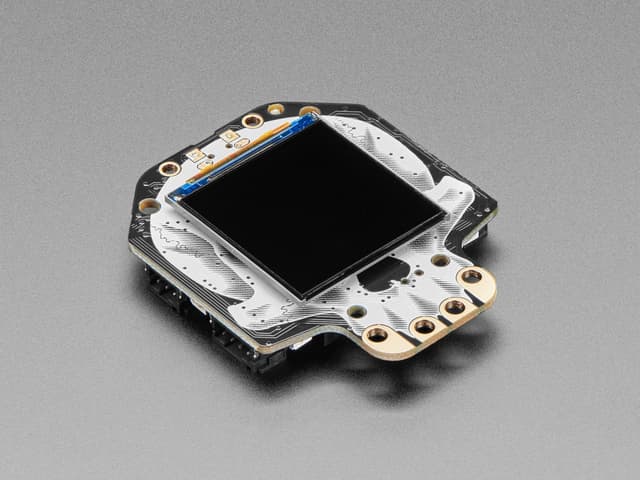
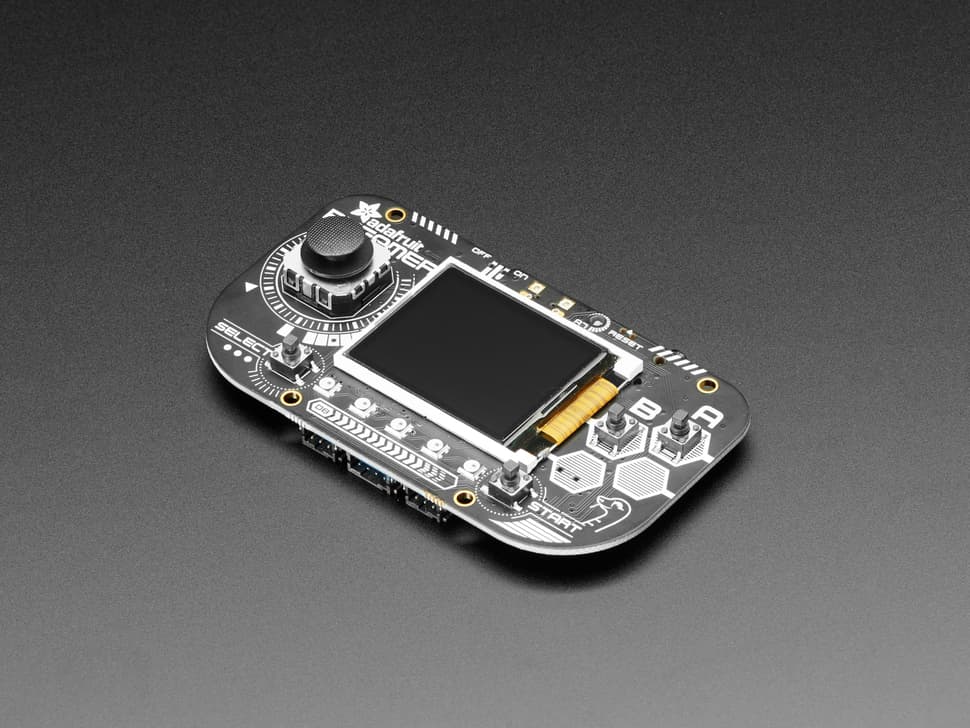
The Adafruit PyGamer is a handheld gaming and development platform that fits in your pocket while delivering serious maker capabilities. Built around the ATSAMD51J19 ARM Cortex-M4F microcontroller running at 120MHz, it combines a 1.8-inch 160×128 color TFT display with a dual-potentiometer analog thumbstick, four game buttons, and 5 NeoPixel LEDs into a compact open-source package.
Unlike dedicated gaming handhelds, the PyGamer is also a fully capable development board. Its Feather-compatible header sockets accept any FeatherWing accessory, and three STEMMA connectors (two 3-pin ADC/PWM and one 4-pin I2C) allow easy sensor expansion. The board ships with 8MB of QSPI Flash for storing assets, a micro SD card slot for additional storage, a mono Class-D speaker driver, and a LiPoly battery port with integrated charging.
The PyGamer supports three programming environments out of the box: Microsoft MakeCode Arcade for block and JavaScript-based game development, CircuitPython for rapid Python prototyping, and the Arduino IDE for full C/C++ control. A triple-axis accelerometer and front-facing light sensor open up motion- and light-reactive game mechanics without any add-ons.
All hardware design files are open source. The board measures 101.6×60.0×19.5mm and weighs 37.5g, making it comfortable to hold for extended play sessions. Note that button caps, acrylic case, speaker, and battery are sold separately.
Use Cases
3Retro Gaming
Running classic game emulators (NES, Game Boy, Pong) or building handheld game consoles with display and controls.
IoT
Internet of Things applications including connected sensors, actuators, and smart devices that communicate over WiFi, BLE, LoRa, or other wireless protocols.
Wearable
Body-worn computing devices including smartwatches, fitness bands, and health monitors.
Where to Buy
Explore more of the directory — popular use cases, firmware, and specs to browse next.