Adafruit My Little Hacker ESP32-S2
Child-oriented ESP32-S2 dev board with 4MB flash, 2MB PSRAM, 5 NeoPixels, microSD, I2S audio amplifier for speakers, USB-C, STEMMA QT, and AA battery or USB-C power support.
$0.00
Tap any value to browse matching devices
Specifications
Components
Maxim I2S Class D amplifier, up to 3W into 4-8 ohm speaker.
Five addressable RGB NeoPixel LEDs for visual feedback.
Bus Interfaces
GPIO Map
Overview
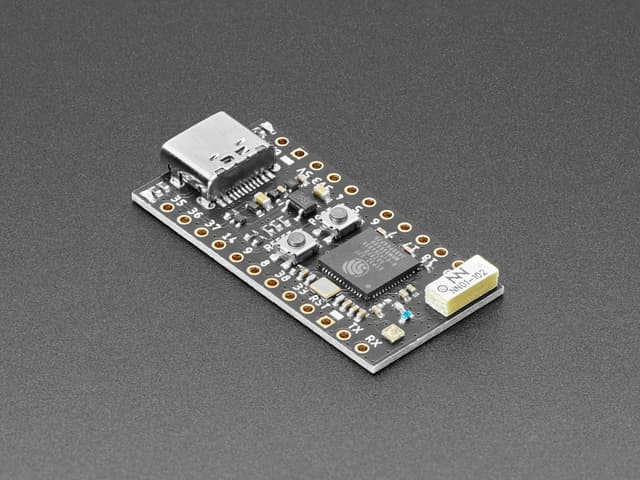
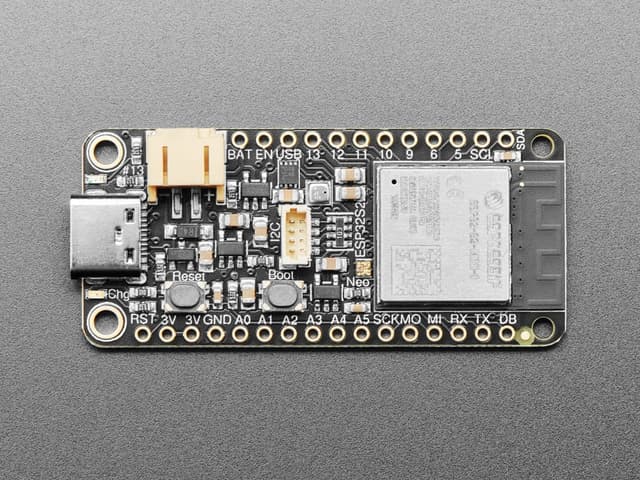
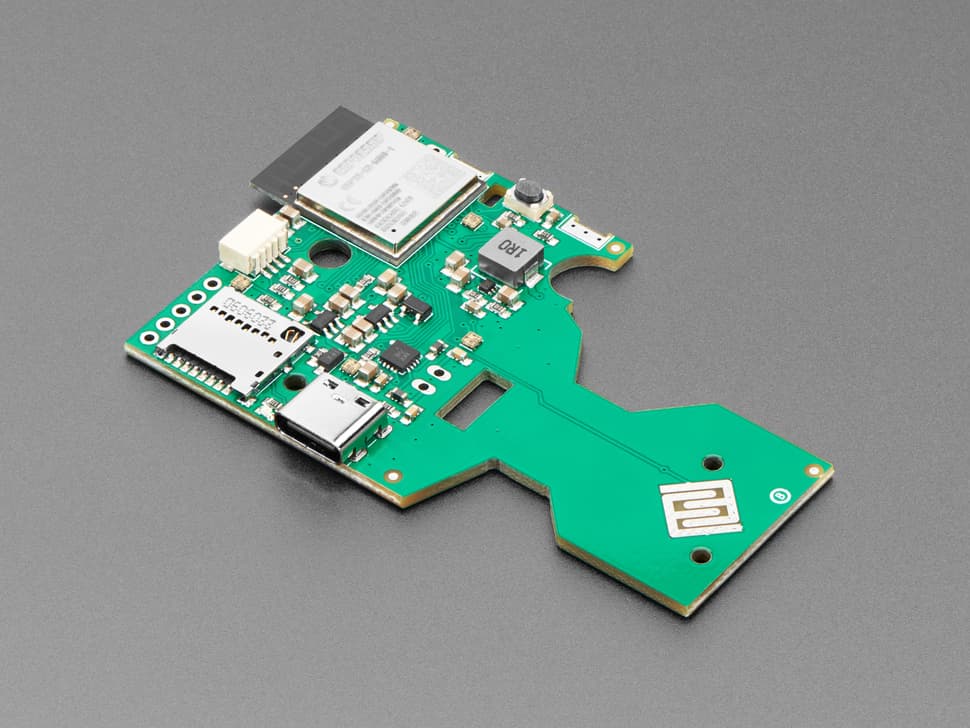
The Adafruit "My Little Hacker" ESP32-S2 Development Board is a fully capable Wi-Fi-enabled microcontroller platform designed with young makers and beginners in mind. Despite its child-friendly branding, it packs the same ESP32-S2 module found in professional development boards: a single-core 240 MHz processor with 4 MB flash, 2 MB PSRAM, and native USB support via the USB Type-C connector.
The board features five NeoPixel RGB LEDs for colorful visual feedback, a microSD card slot for audio file storage, and an I2S digital amplifier capable of driving 4- or 8-ohm speakers at up to 3 watts — making it a capable audio player platform right out of the box. A STEMMA QT (Qwiic-compatible) connector allows easy attachment of I2C sensors without soldering.
Power flexibility is a highlight: the board accepts both USB-C and two AA batteries through a built-in boost converter, enabling portable battery-powered projects. CircuitPython support makes it accessible for beginners using block-based or text-based code, while experienced developers can use ESP-IDF or Arduino. Despite its educational positioning, this is a fully functional IoT development board suitable for creative, audio, and sensor projects of all complexity levels.
Use Cases
5Education
Teaching programming, electronics, and computer science concepts. Popular in schools, universities, and coding bootcamps.
Audio
Audio playback, streaming, amplification, digital signal processing, and music projects.
Prototyping
Rapid hardware prototyping and proof-of-concept development with breadboard-friendly form factors and accessible development environments.
Wearable
Body-worn computing devices including smartwatches, fitness bands, and health monitors.
IoT
Internet of Things applications including connected sensors, actuators, and smart devices that communicate over WiFi, BLE, LoRa, or other wireless protocols.
Where to Buy
Explore more of the directory — popular use cases, firmware, and specs to browse next.